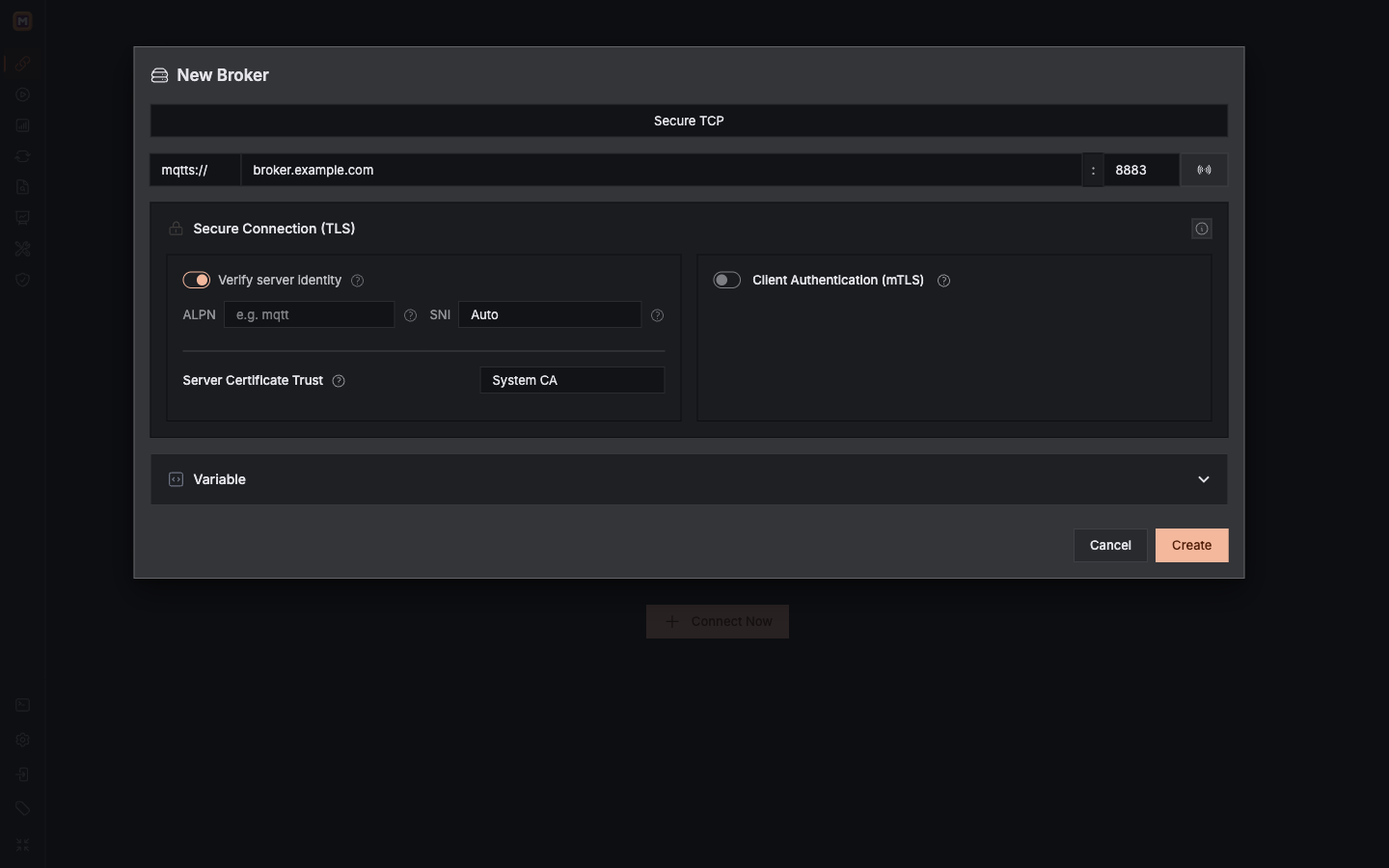
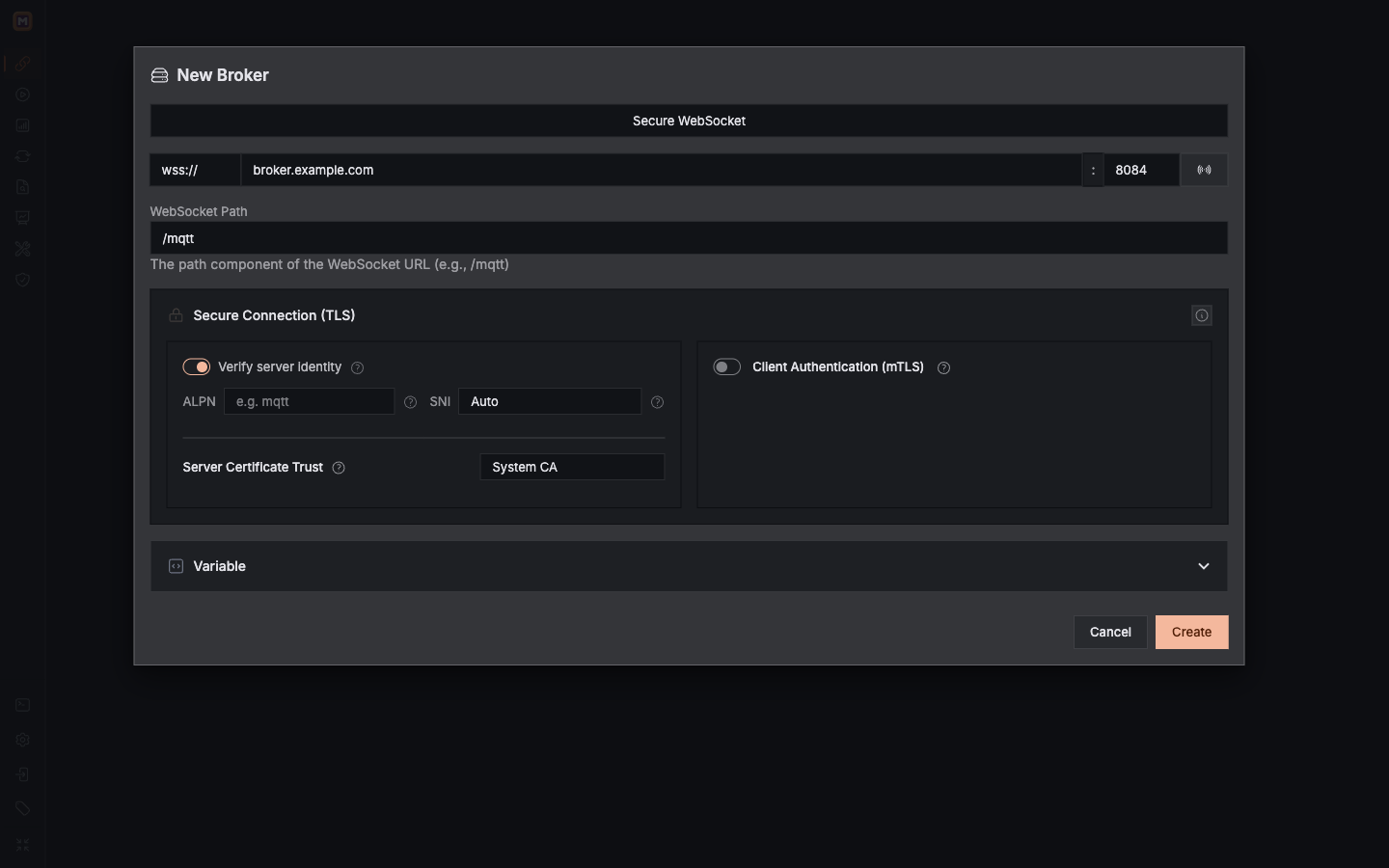
For mqtts, wss, or quic, use the TLS certificate guide to decide whether you need no upload, a CA certificate, or a CA plus client certificate and key.
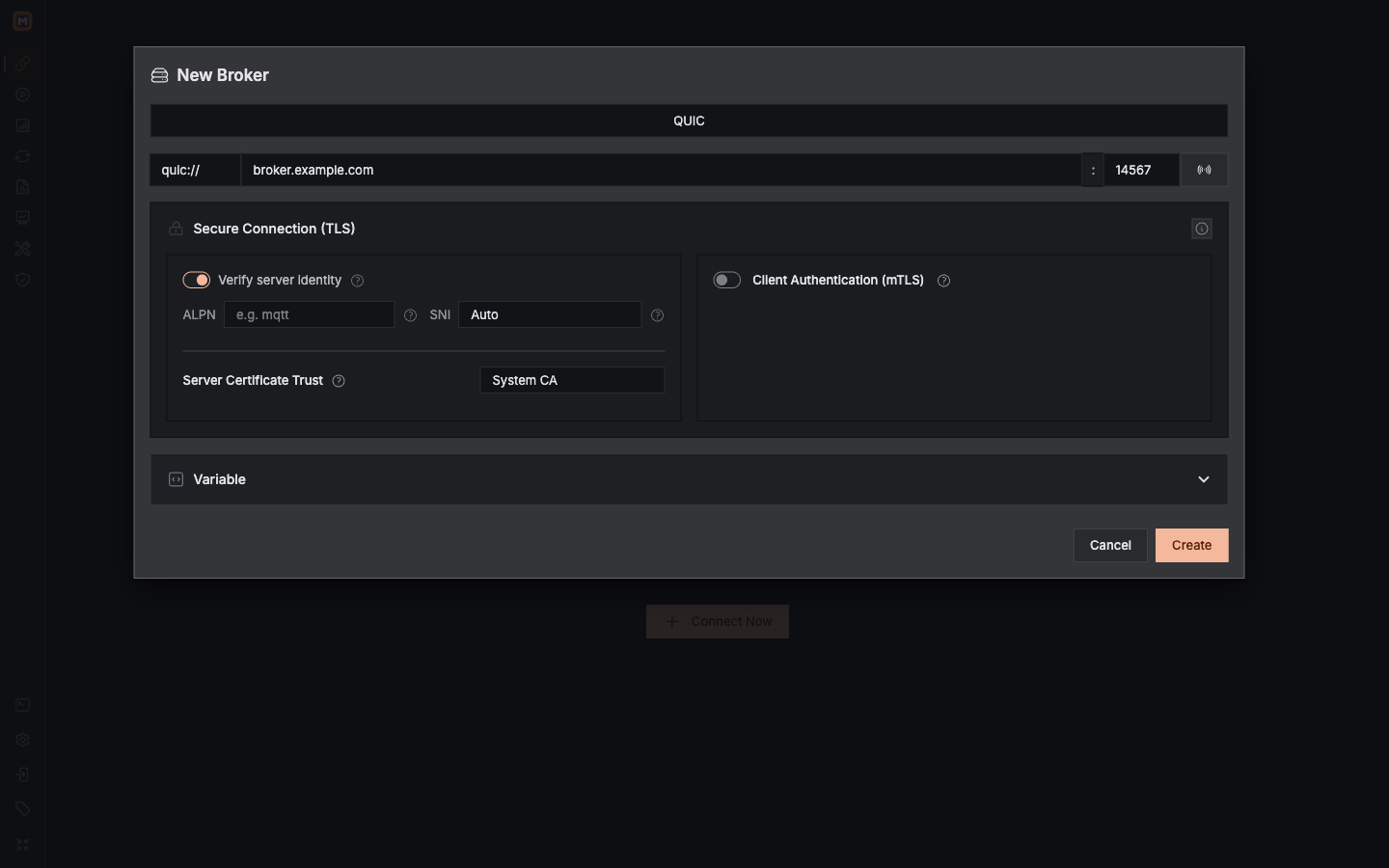
QUIC uses its own UDP listener and the same certificate controls as other secure transports.
1quic uses the Broker QUIC listener and UDP port.
2Server verification, CA trust, SNI, and ALPN must match the listener.
3mTLS adds a client certificate when required.
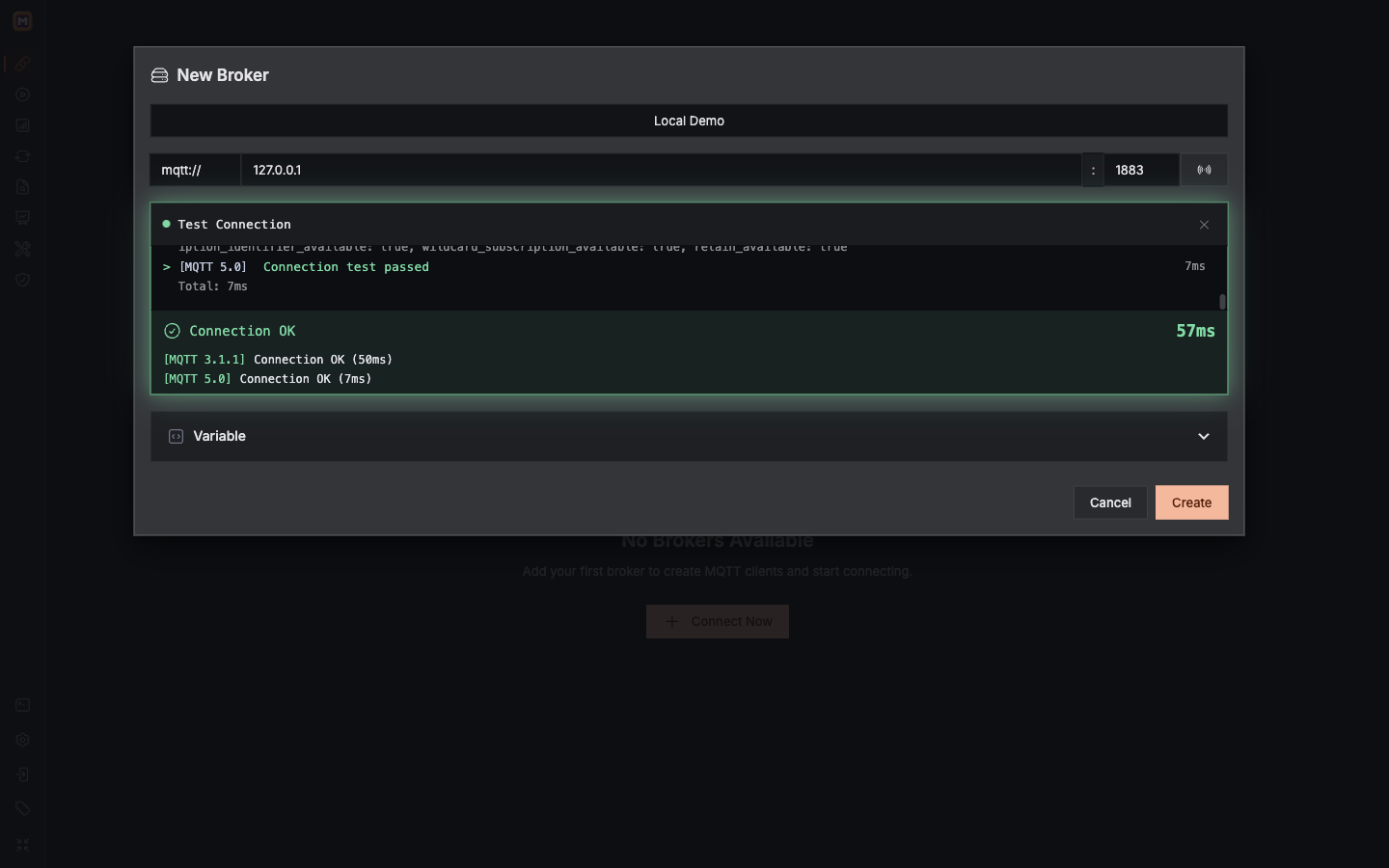
Select Test Connection, then Create. A green Connection OK confirms the endpoint accepted the displayed MQTT versions; client authentication and session settings are checked after you create a Connection.
Create an MQTT Connection
After saving the Broker, select New Client.
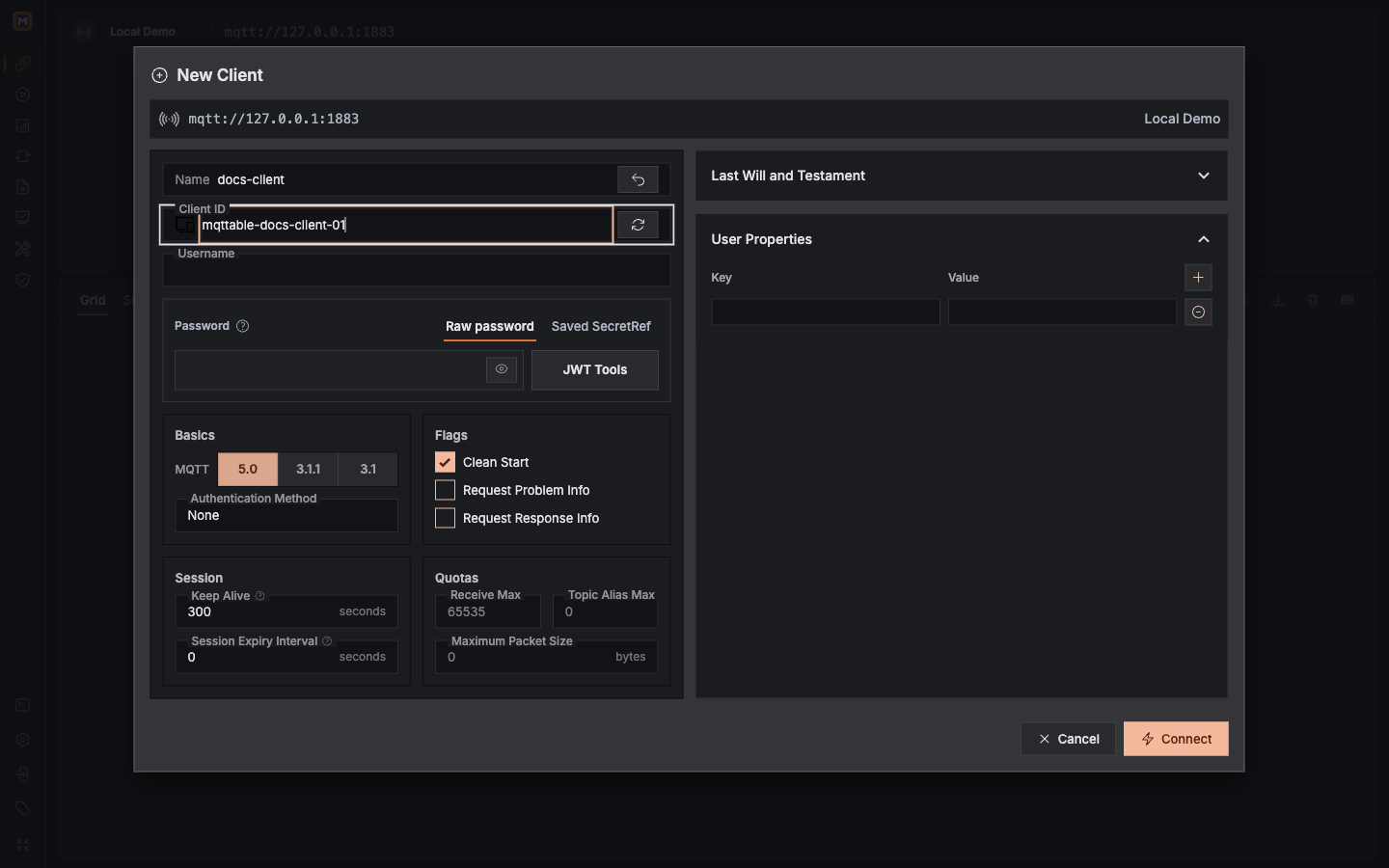
Name / Client ID: Name is only a display label. Client ID is the identity seen by the Broker and must be unique among connected clients. Keep it stable when resuming a session.
MQTT version: Prefer 5.0 when the Broker supports it, use 3.1.1 for devices that require it, and reserve 3.1 for identified legacy systems.
Authentication: With MQTT 5.0, select the None, Password, JWT, or SCRAM method required by the listener. Follow the authentication guide for credentials, SecretRef, JWT claims, and SCRAM requirements.
Clean Start: Keep it on for a first test. Turning it off requests an existing session; it is not an automatic-retry switch.
Keep Alive: Uses PINGREQ/PINGRESP when idle to check the connection. The default is 300 seconds; 0 disables MQTT Keep Alive.
Session Expiry Interval: In MQTT 5, 0 discards the session after disconnect, a positive value retains it for that many seconds, and 4294967295 means no expiry. Keep 0 for a first test.
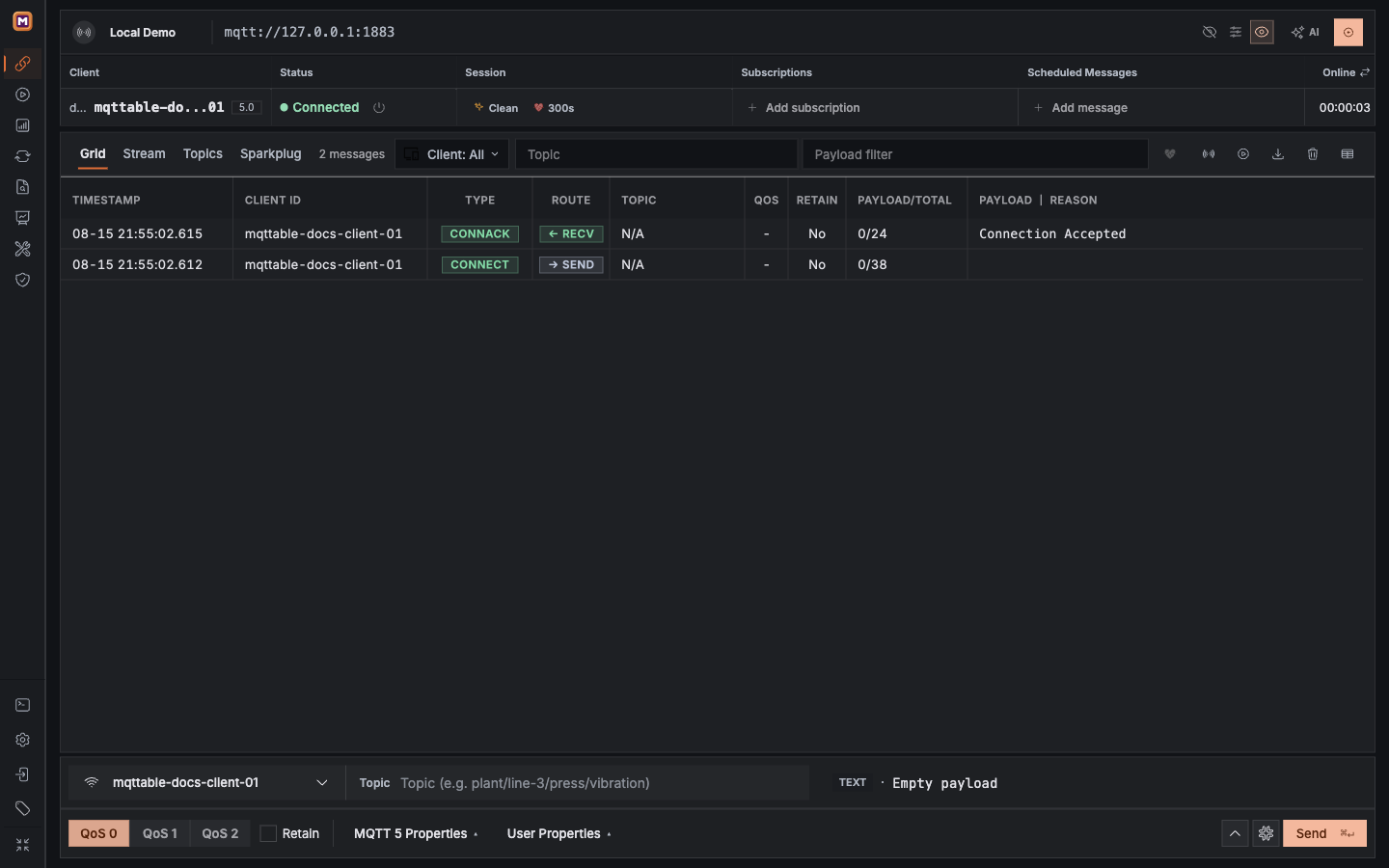
Connected plus CONNECT/CONNACK proves that the current MQTT Session was established.
1The state is Connected and the row includes the session summary.
2The client sends CONNECT and the Broker returns CONNACK.
3Connection Accepted confirms this MQTT connection attempt succeeded.
Connected does not prove Topic permission or message delivery. Use the first MQTT message tutorial to verify subscribe, publish, and Trace.
Quick troubleshooting
A saved Connection cannot connect or drops unexpectedly: Mqttable shows Retrying and retries automatically—after 10 seconds when a connection attempt fails, or after 5 seconds when an active connection drops. It keeps retrying until the client connects or you select Stop.
Test Connection fails: This is a one-off endpoint check and does not enter the automatic reconnect loop. Check Host, Port, DNS, firewall, and whether the listener is running.
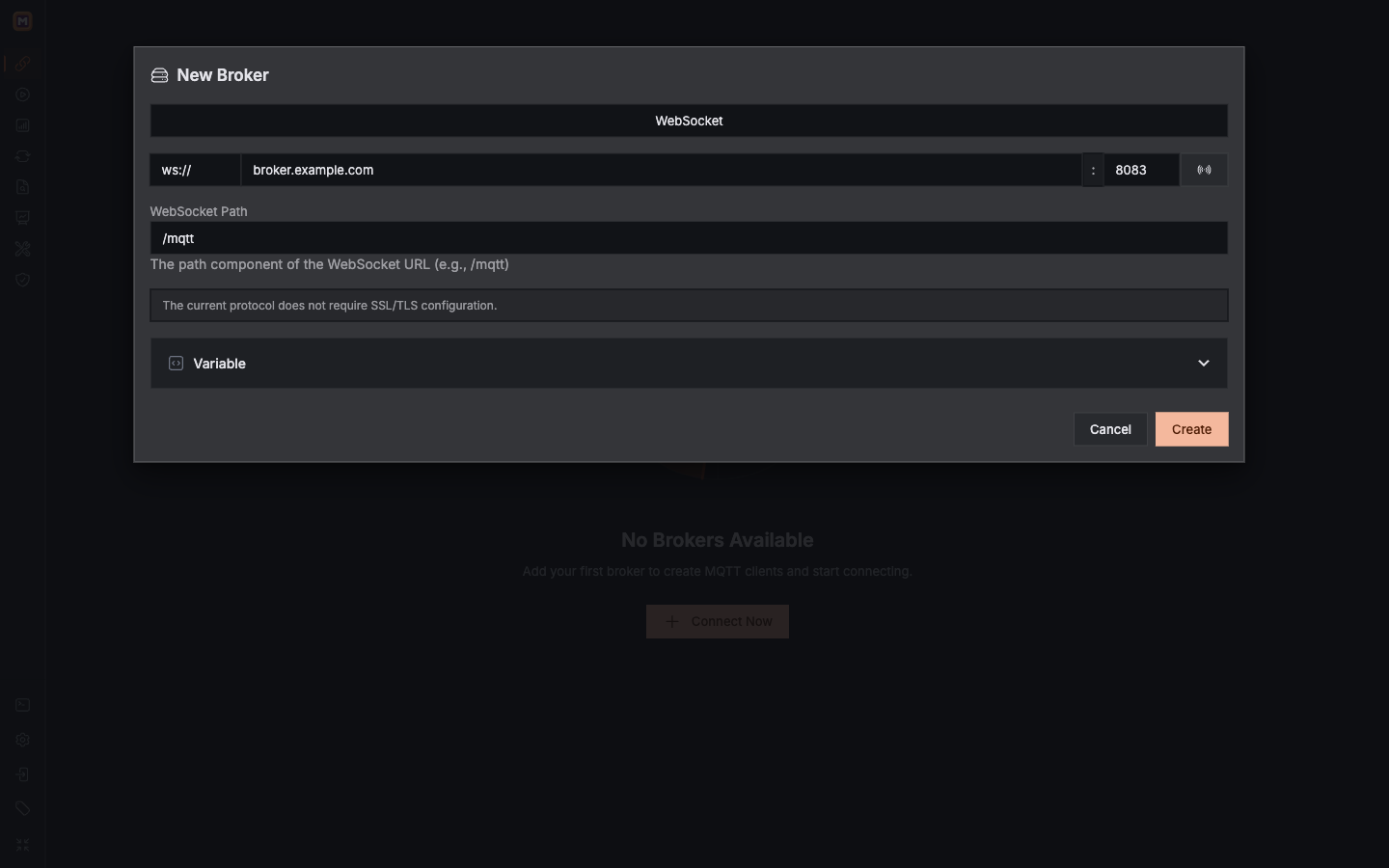
TLS or WebSocket fails: Check the CA, server name, client certificate, and WebSocket Path.
CONNACK is rejected: Check the MQTT version, Client ID, and authentication material.
Connected but cannot publish or subscribe: Check the Topic ACL instead of changing the endpoint again.